
The whole portal is available in English — and so is the questionnaire itself, which you can switch between German and English at any point without losing the answers you have already given. Use the language selector at the top right of every page.
Three documents are legally binding in their German version only: the legal notice (Impressum), the privacy notice (Datenschutzerklärung) and the accessibility statement (Barrierefreiheitserklärung). Their English versions are courtesy translations; where the two differ, the German wording applies. Each of those English pages says so at the top.
Your access code works regardless of language — you do not need to request anything additional. If you need help understanding a question, please call or write to us; the contact details are in the box beside this text.
Below you will find answers to frequently asked questions about the survey, together with a search box. The search covers the questions on this page and the list of portal pages further down.
Frequently asked questions
How does the survey work?
You have received a letter from us containing a personal access code. On the home page you click “Go to the survey”; the first page of the questionnaire then asks for that code — nothing else is required, there is no registration and no password. The person to answer is the adult in the household who had their birthday most recently.
You answer the questions at your own pace. You can interrupt the survey and continue later at the same point, as long as you use the same access code — on another device, too. At the end you submit the questionnaire; your participation is then complete.
Participation is designed to take place online. If that is not possible for you — no internet, no device, or filling in forms on screen does not work — please give us a call. We will then look for a way together.
Why are cultural surveys necessary?
A great deal is decided about theatres, museums, libraries, concerts and neighbourhood culture: opening hours, ticket prices, programmes, locations and which offerings continue at all. Until now, those decisions have often rested on visitor numbers — but those only show who came. They do not show who would have liked to come, and why it did not work out.
That is precisely the gap a survey closes. It also reaches people who rarely use cultural offerings or never use them at all — and their reasons are at least as informative as the satisfaction of regular visitors.
Why am I being surveyed?
Your address comes from a random sample. That is: a mathematical procedure selected a limited number of households from all households in Düsseldorf, and yours was among them. We did not pick you because you are interested in culture, go to the theatre, or left your data somewhere.
This is not randomness out of convenience but the core of the method: only if every household has the same chance of being selected do the results allow conclusions about the population of the city district surveyed — and, once the survey is extended, about the city as a whole. That is also why nobody can replace you — every decline makes the picture a little less accurate, especially for groups that rarely respond anyway.
How long does it take?
The questionnaire takes around 12 minutes. That figure is an estimate and refers to the median duration — anyone answering in detail will need a little longer.
You do not have to complete the survey in one go. If you interrupt it, the questionnaire remembers where you were and you can continue later.
What do I need?
Just two things:
- Your access code from the letter or the participation card — eight characters in two blocks.
- A device with internet access: computer, tablet or smartphone. An up-to-date browser is enough; you do not have to install anything.
You need no user account, no password and no email address. Which browsers are suitable, and what helps with technical difficulties, is set out under Technology.
How will the data be used?
Your answers are combined with everyone else's and evaluated only in that aggregated form — as proportions, averages and comparisons between groups. Individual questionnaires are neither published nor passed on to third parties.
The results are used for academic analyses, among them the doctoral thesis of the head of the study, and for a results report that we publish ourselves. Aggregated analyses are later to be made available to cultural institutions as well, in part for a fee — your individual answers are never part of them. No clients, public bodies or sponsors are involved. Exactly what is collected and how long it is stored is set out under Data.
Is my data safe?
Transmission is encrypted. Your access code serves only to avoid duplicate participation and to keep us from writing to you again — it is not stored linked to your name or address. Address data and answers are kept separately; the connection between the two is deleted once the survey is complete.
We use no tracking and no analytics services — which is why you see no cookie banner here either. The full details are in the privacy notice.
Important: your invitation and your access code arrive by post only — never by email. We never ask for bank details or passwords. If you receive a message of that kind, it did not come from us.
What do I do if I have lost the invitation?
No problem — get in touch and we will send you a new access code. Write to sondergeld@duesseldorfer-kulturpanel.de, stating the name of the survey and the address the letter was sent to.
We send the new code by post only, to that address, not by email. That is more cumbersome, but it prevents someone else from gaining access with your code.
How do I withdraw my consent to take part?
Taking part is voluntary. You can stop at any time, without giving reasons and without any disadvantage. Simply break off — no reminder will follow.
If you would also like answers you have already given to be deleted, a message to sondergeld@duesseldorfer-kulturpanel.de quoting your access code is enough. We will then delete the record in full and confirm that to you.
That is only possible for as long as the code can still be matched to a record. Once the data set has been anonymised, the link can no longer be reconstructed and individual answers can no longer be deleted. Details of your rights are set out in the privacy notice.
Where do I find information about the results?
We publish results under Articles. That is where analyses and articles on cultural life in Düsseldorf appear as they become available.
The results report for the pilot study in city district 1 is expected in the year after the field phase ends; we will name a date once the field phase is complete. If you would like to be sent a copy, please tick the relevant box at the end of the questionnaire.
Which parts of the portal are available in English?
All of it. Every page of the portal has an English version, from the home page through The study and Data to the privacy notice. The language selector at the top right of every page switches between the two.
The questionnaire itself can also be answered in English. You can switch language there at any point — even halfway through; the answers you have already given are kept.
Only the legal notice, the privacy notice and the accessibility statement are legally binding in German; their English versions are courtesy translations. There is also a version of the portal in Leichte Sprache — plain German with short, simple sentences.
Your access code is the same in both languages — you do not need to request anything additional.
No question matches this search term. Please write to us directly — the address is in the box beside this text.
Further pages
All of these pages are available in English. The name in brackets is what the page is called in the German version.
- Home page Overview of the survey and the way into the questionnaire.
- Contact Email address, what your message should contain, and who to speak to.
- About the researcher (Zur Person) Christian Sondergeld: background, verifiable references and what he commits to.
- Tips (Tipps) How to fill in the questionnaire quickly, interrupt it and continue later.
- Technology (Technik) Browsers, smartphones, accessibility — and what helps when something goes wrong.
- The study (Studie) Purpose, who conducts it, sample and course of the leisure and culture panel.
- Living in Düsseldorf Why a survey on leisure and culture begins with how you live in this city.
- Your free time Why the amount of freely available time is asked about before what it is used for.
- Culture: interest, access, community Why it matters who you go with, who suggests it and whether you feel an offer is meant for you.
- Articles (Artikel) Analyses and articles on cultural life in Düsseldorf.
- Data (Daten) What is collected, how long it is stored and who evaluates it.
- Leichte Sprache — plain German All the essentials in short, simple German sentences. Often easier to follow than the standard pages.
- News (Neuigkeiten) Notices on the progress of the survey and on the portal.
- Privacy notice (Datenschutz) Processing of your data, legal bases and your rights.
- Accessibility (Barrierefreiheit) Accessibility statement and how to report barriers.
- Legal notice (Impressum) Provider identification for this portal.
No page matches this search term.
On this page
Who to contact
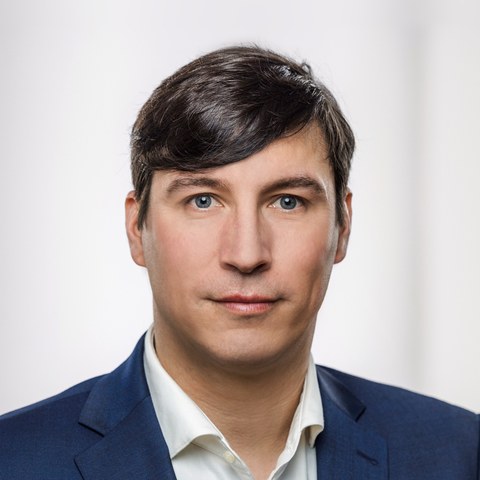 Christian Sondergeld
Head of the study
Christian Sondergeld
Head of the study
sondergeld@duesseldorfer-kulturpanel.de
We never send your access code by email and never ask for bank details or passwords. The code arrives by post only.
Do you already have an access code?
Go to the questionnaire